Your cart is currently empty!
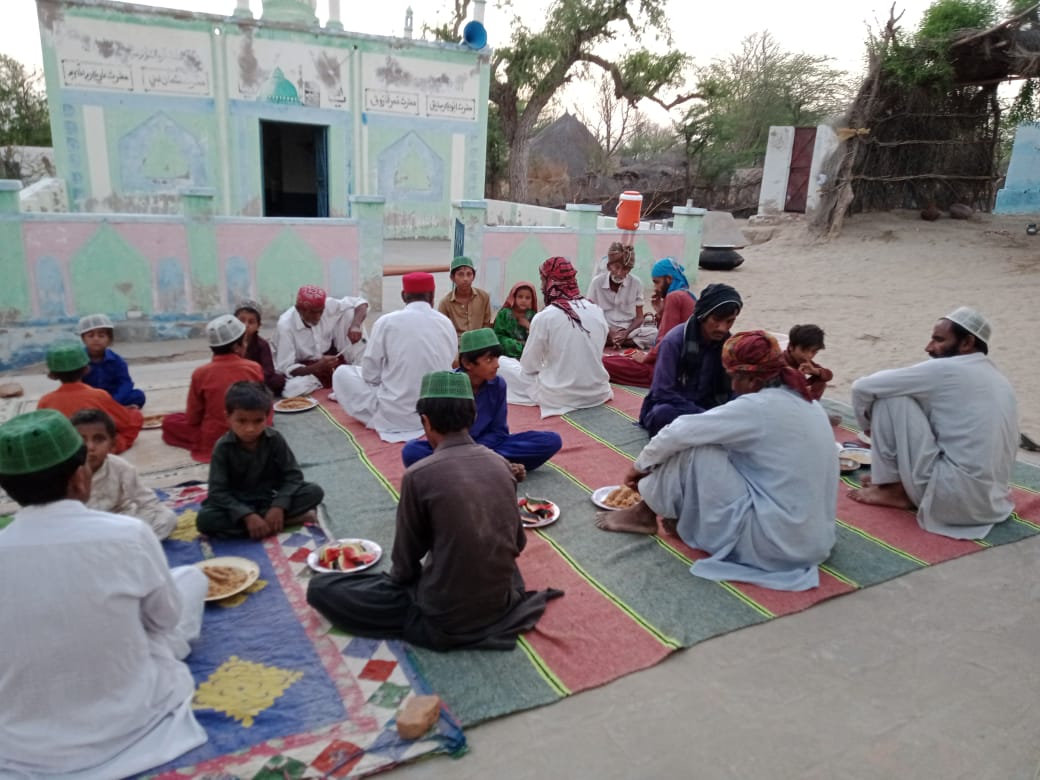
Eid is “the festival of breaking the fast” and commemorates the end of Ramadan, a month-long period of fasting observed by Muslims around the world. Eid is an important time in Islam, bringing families, loved ones, and communities together to celebrate, reflect, and share in the spirit of generosity.
Throughout Ramadan, Muslims around the world fast from sunrise to sunset and devote additional time to self-reflection, prayer, studying the Qur’an, and strengthening their spiritual connection with their faith.
During the holy month of Ramadan, Khuwaja Welfare Association (KWA) launched its Dastarkhwan campaign across rural communities in Sindh. Meaning “tablecloth” in Turkish, Dastarkhwan reflects the tradition of gathering around a shared meal. Throughout Ramadan, KWA provided Iftaar meals and essential household food rations to families facing food insecurity. By the end of the month, 237 Dastarkhwan were hosted across more than 51 villages, providing approximately 18,000 meals to community members in need.
Food insecurity remains a significant challenge in rural Sindh, where widespread poverty and limited access to essential resources contribute to malnutrition, particularly among women, children, and older adults. KWA is committed to helping rural communities address these challenges by meeting immediate food needs while also supporting long-term food security.
As part of this effort, KWA is developing agricultural projects in the Thatta and Tharparkar districts. Using solar-powered wells, these projects bring water to agricultural fields, enabling communities to grow fresh, nutritious, and locally sourced produce. This approach not only improves access to healthy food but also promotes sustainable agricultural practices and greater community self-sufficiency.
KWA also provides monthly household food rations to families with limited or no income, helping ensure that vulnerable households have consistent access to essential food supplies. Through initiatives such as Dastarkhwan, agricultural development, and household ration support, KWA continues to work toward a future where rural communities in Sindh have greater access to nutritious food, sustainable livelihoods, and the resources they need to thrive.